

Systems engineering
and Digital Twins
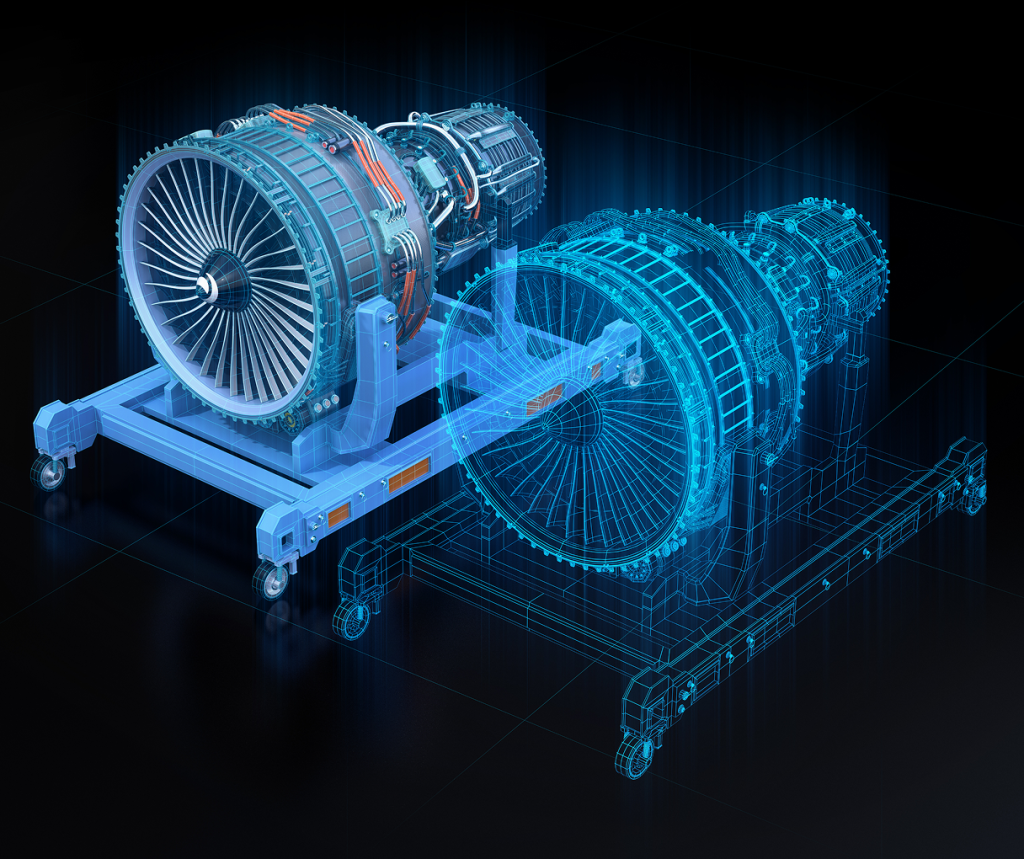
Digital Twins are a pillar of systems engineering. By providing decision-assistance capabilities and continuity between the physical and digital worlds, Digital Twins support the transformation of industrial systems. Operational technology (OT) data is gathered and modeled to produce high-fidelity representations (Digital Twins) of real-world systems that can be used to predict unforeseen events and play out the impacts of potential decisions without disrupting the real-world system.
Digital Twins can orchestrate simulation at multiple levels and across multiple business functions, supporting continuous, distributed, tool-based engineering, for more robust, flexible, and safer systems. Looking ahead, dynamic interaction with real-world systems will lead to a controlled and verifiable framework for self-evaluating systems and real-time decision-assistance. Several technological hurdles must still be overcome to bring Digital Twins to their full potential, and CEA-List is addressing these challenges.
Interoperability, for example, will be vital to Digital Twins interfacing seamlessly with existing systems without draining additional resources. One of our solutions is a software architecture that enables both flexibility and automation. Software engineering—which is expensive and requires skilled engineers—is another challenge. We are developing AI-based approaches that speed up physical modeling and simulation while reducing the level of technical expertise required at these stages of development. Finally, we are developing a qualitative methodology to answer crucial questions around the evaluation of environmental and economic costs of massive deployment of Digital Twins in industry.
We are investigating issues like the security of IT/OT communications and the vulnerabilities inherent to tight interactions between the physical and digital worlds; the integration of agentic AI to enable distributed, autonomous, and communicating Digital Twins; and the evaluation of these concepts within environments characterized by shared data spaces as enablers of digital continuity across business functions.